
20
May
Comprehensive Evaluation of the Project "Women Exercising Their Active Citizenship"
Comprehensive Evaluation of the Project "Women Exercising Their Active Citizenship"
Recently, our team completed the final external evaluation of the project "Women Exercising Their Active Citizenship for Their Right to a Life Free from Violence," a significant intervention implemented collaboratively by the consortium comprised of the Alliance for Solidarity Foundation ActionAid, CDIMA, IFFI, and ACOBOL.
The evaluated project aimed to promote women's full participation in the economic and political life of their communities and strengthen the community and institutional response to gender-based violence. Implementation took place in urban and rural areas of the country (El Alto, Cercado Cochabamba, Sacaba, and Coroico), addressing dimensions of personal empowerment, economic autonomy, and political influence. At Gerenssa, we approach this reality understanding that these issues are not isolated phenomena, but rather dynamic processes that require a comprehensive analysis of the institutional, social, and community conditions in which rights holders live.
To conduct this analysis, a rigorous methodological approach based on Results-Based Management (RBM) was employed. This approach prioritizes measuring observable effects and transformations in target populations over simply fulfilling activities. The evaluation process was structured according to international standards from the OECD Development Assistance Committee (DAC), thoroughly analyzing the criteria of relevance, coherence, effectiveness, efficiency, impact, and sustainability of the intervention. Furthermore, we integrated gender, human rights, intersectionality, and intercultural perspectives across the board, ensuring a contextualized understanding of the gaps and inequalities.
These approaches were complemented by the application of the qualitative methodology of "The Most Significant Change" (MSC). Through this participatory tool, we were able to capture the profound transformations experienced by women, leaders, and institutional actors from their own narratives and perspectives. This methodology allowed us to go beyond quantitative data on indicator compliance to visualize and understand subjective changes, the overcoming of cycles of dependency, and the strengthening of citizen agency in the territory.
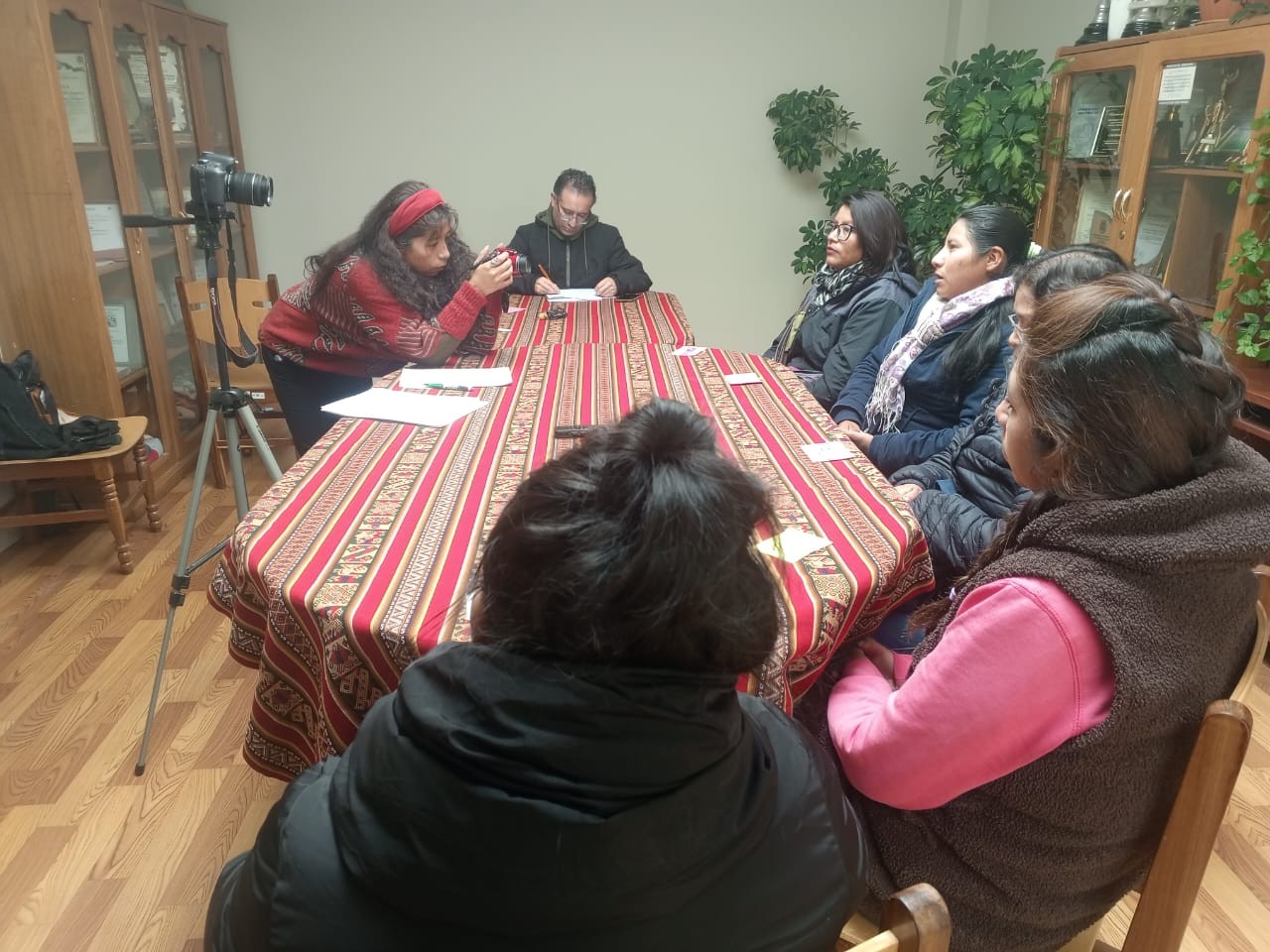
The fieldwork involved deploying the evaluation team to the municipalities prioritized for implementation, to conduct individual and group semi-structured interviews, which provided the raw material for subsequent analysis. To enrich this human effort, at Gerenssa we incorporated cutting-edge technological tools, such as artificial intelligence, to achieve systematic triangulation of multiple primary and secondary, qualitative and quantitative sources. Additionally, this entire process was accompanied by the production of a documentary video that captures images and direct testimonies from the participants, establishing itself as a visual, agile, and artistic tool for presenting and sharing the evaluation's findings and results—a hallmark of the added value that Gerenssa delivers.
This comprehensive evaluation not only demonstrates the strength of our research processes, but also our commitment to generating strategic inputs that promote learning and guide decision-making. Through the professionalism of our interdisciplinary team, at Gerenssa we continue to consolidate our expertise, proving once again that rigorous evaluation, empathetic fieldwork, and the adoption of modern technologies are essential elements for demonstrating and maximizing the true impact of development projects in Bolivia and the region.
Compartir